
Marshall County Court Records After Arrest
Marshall County criminal cases are filed in Marshall County District Court, which is part of the 22nd Judicial District of Kansas. The court office is at 1201 Broadway, P.O. Box 149, Marysville, KS 66508, and the district court phone is 785-562-5301. The district court clerk page says all Marshall County District Court cases are filed in that office, with each case file maintained by pleading, filing date, and filing time. That file is the main court record after a jail arrest, not the booking sheet itself.
A person may be booked at Marshall County Jail on an arrest allegation, a warrant, a probation matter, or another hold. Those jail details help identify the person and the event, but the filed charge is controlled by the prosecutor and the court. For current custody and booking status, use the Marshall County jail inmate records route. For booking-photo questions, use the Marshall County jail mugshots route. Court records after a jail arrest focus on filed charges, hearings, bond conditions, warrants, dispositions, and documents that the court can release under Kansas rules.
The official Marshall County District Court page identifies the court contact, hours, and local email for court-record questions.
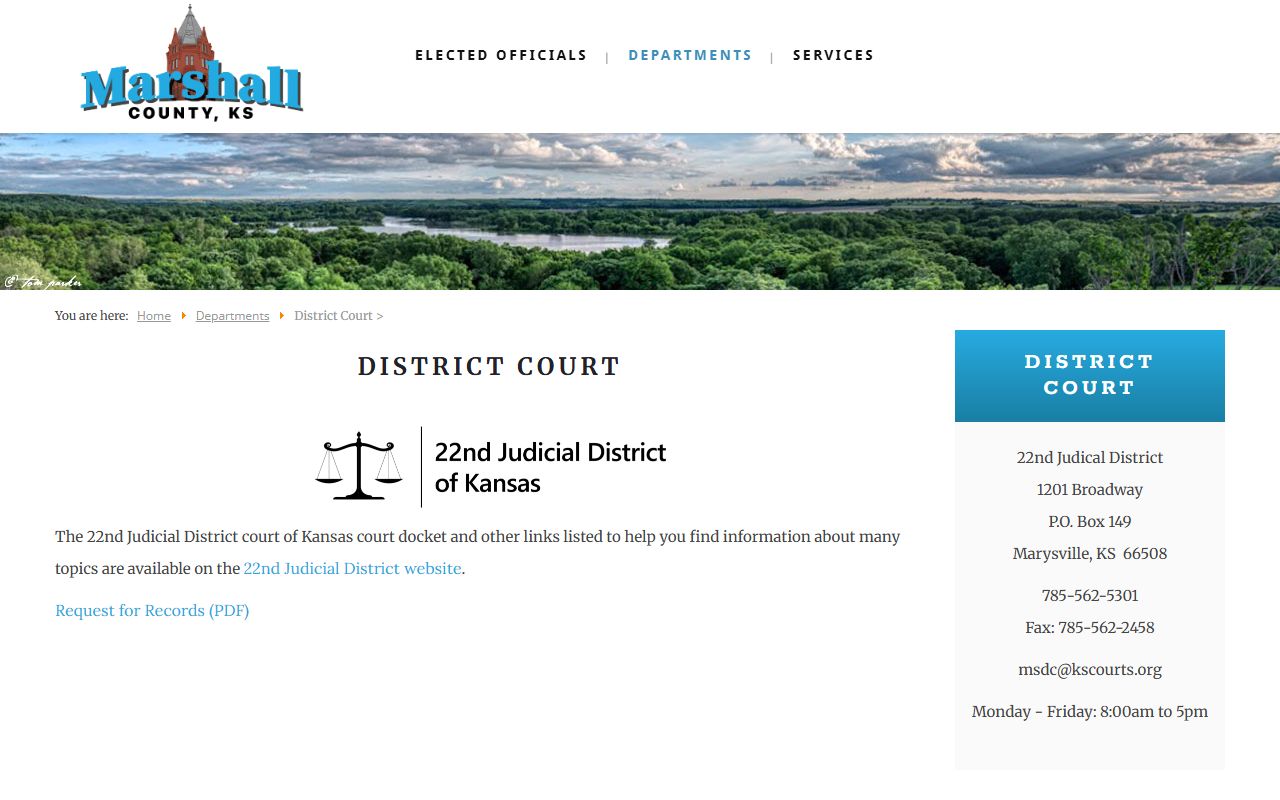
That court contact is the local fallback when a Kansas CaseSearch result is missing, unclear, sealed, or limited to courthouse access.
Find Marshall County Arrest Court Records
The statewide Kansas District Court CaseSearch portal is the first online channel for court records after a jail arrest in Marshall County. The research source set found no separate Marshall County warrant or court-charge search on the county site. CaseSearch should be checked after filing because a booking number, jail intake date, or arrest agency entry may not be the same as the court case number. If a search does not return the case, call the district court clerk or make a Kansas court-record request.
Use the most exact name available. Court records may use a full legal name, initials, or a different order than jail staff used at intake. If a case number is known from a citation, bond paper, notice to appear, or court notice, search by that number first. Kansas Judicial Branch guidance says a record or case number, or a name, is required for Smart Search. Role-based access can change what fields or documents are visible to the public.
| CaseSearch Field | Type | Required | Use in Marshall County |
|---|---|---|---|
| Case Number / Record Number | Text | One search path | Best when a court notice, citation, or clerk gives the case number. |
| Name / Party Name | Text | One search path | Use the defendant's legal name when the jail booking number is not a court number. |
| Business Name | Text | Optional | Useful only for business-party searches, not most jail-arrest cases. |
| Citation | Text | Optional | May help with traffic or citation-based criminal filings. |
| Role-based Criteria | Variable | Optional | Available options can vary by user role, case type, and portal access. |
The Kansas CaseSearch portal is the statewide entry point for public district court case lookup.
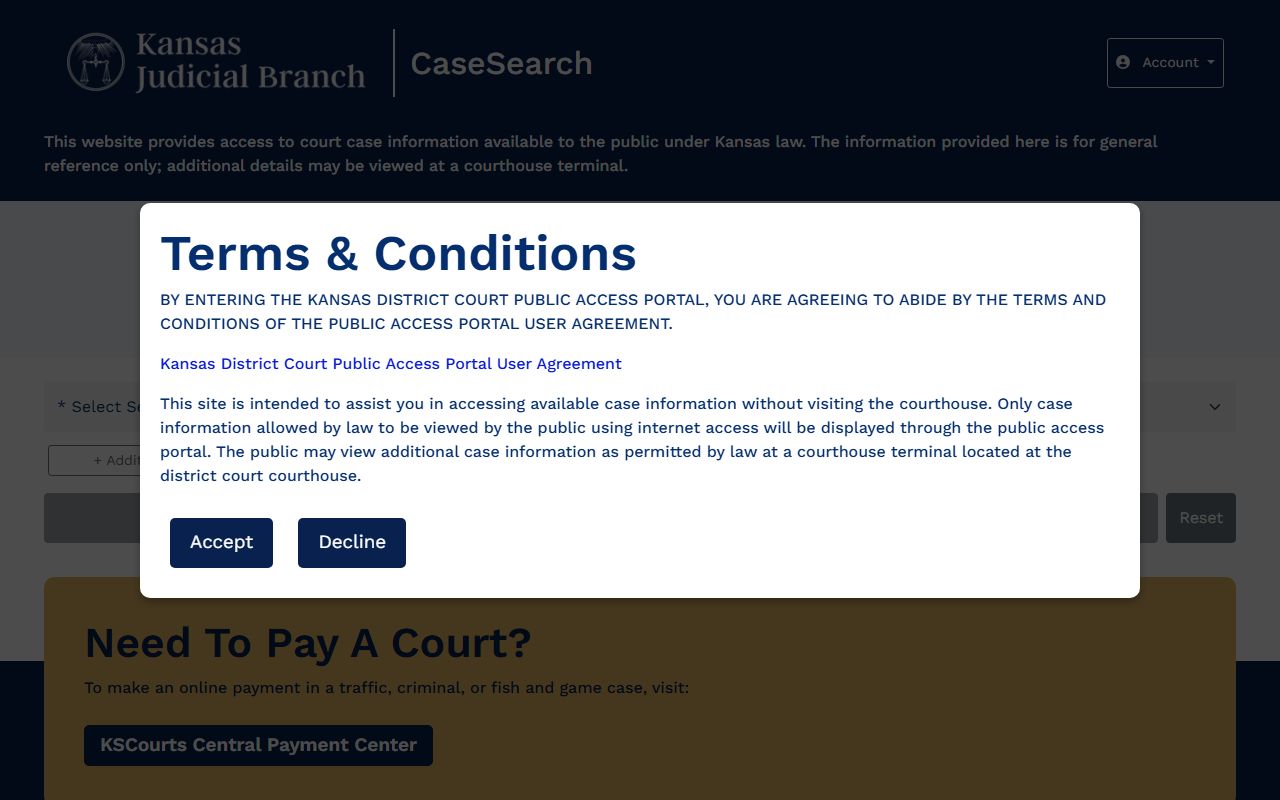
CaseSearch is strongest for filed court case data; it is not a live Marshall County jail roster or a booking-photo gallery.
Marshall County Charging Documents
The Marshall County Attorney prosecutes crimes committed within the county. The office works with law enforcement and considers victim needs, community safety, fairness, justice, and truth. After a jail arrest, that office reviews reports and decides whether to file charges. A court record starts to take shape when a charging document is filed, and that document may differ from the arrest allegation listed at booking.
The official County Attorney page is the local source for prosecutor contact details, including the office at 1201 Broadway, Marysville, KS 66508, phone 785-562-3491, administration email, and diversion contact path. Diversion is a prosecutor-controlled post-charge option, not a jail release method. It should be read through the court case and County Attorney process.
The Marshall County Attorney page documents the local prosecution role that turns an arrest report into filed court charges.
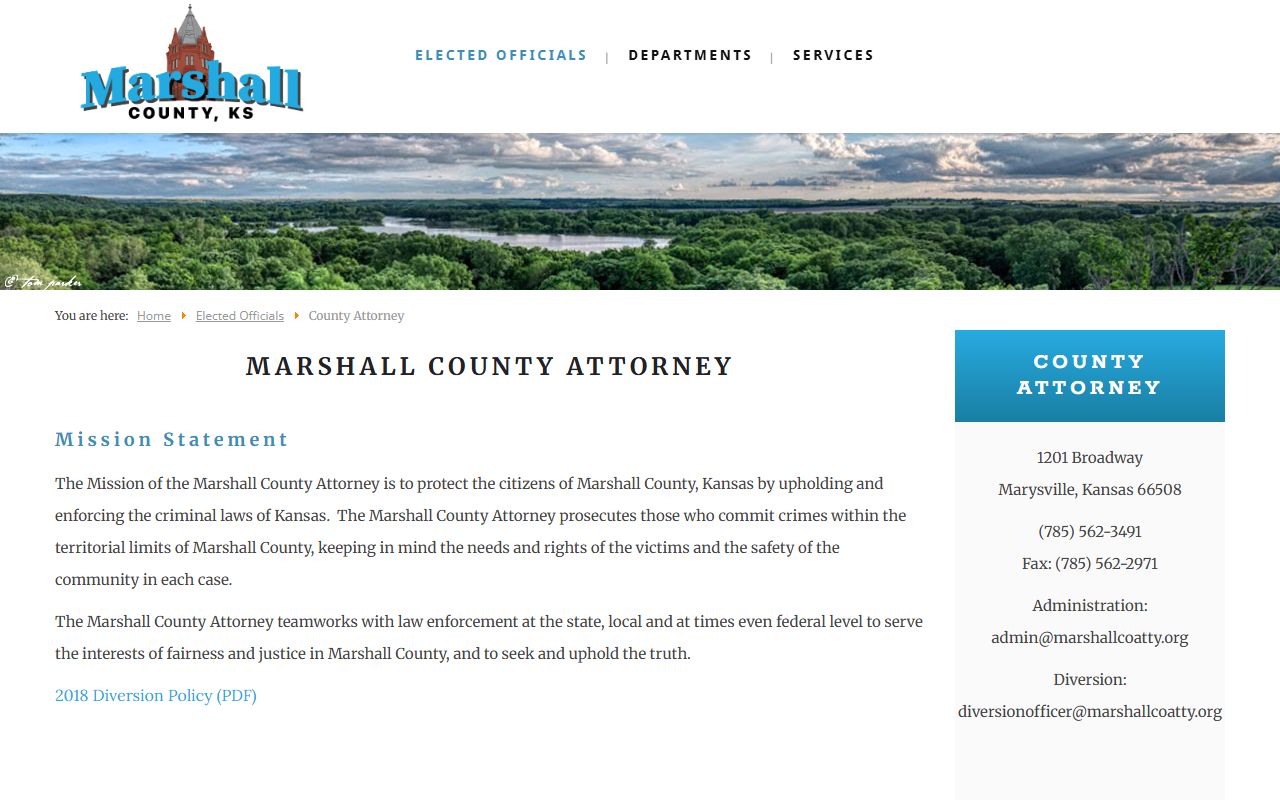
That prosecutor role is why booking charges should be checked against the filed Marshall County District Court case.
| Charging Document | Who Uses It | What It Means | Why It Matters |
|---|---|---|---|
| Complaint | Prosecutor or law-enforcement process | A formal written accusation that can begin a criminal case. | Often the first filed document to compare with the jail arrest entry. |
| Information | Prosecutor | A prosecutor-filed statement of charges used in many criminal cases. | May replace or refine earlier allegations after review. |
| Indictment | Grand jury | A grand-jury charging document. | Less common, but still a formal charge source when used. |
Marshall County Charge Status
Charge status changes as a case moves. A jail record may show the allegation at booking, while the court record may show a complaint, amended count, dismissal, plea, conviction, or warrant event. This is normal. It does not mean either record is useless. It means the two records were created by different offices at different points in the arrest-to-court path.
Kansas court-record request guidance says court-record requests are acted on by the end of the third business day after receipt. Kansas Supreme Court Rule 22 governs access to public electronic district and appellate case records, while sealed or confidential material stays protected. Some Marshall County court records after arrest may show public case data online, while the underlying document must be requested from the clerk or viewed at a courthouse terminal.
| Status | Plain Meaning | Record Caution |
|---|---|---|
| Pending | The charge has been filed and has not reached final disposition. | Do not treat it as a conviction. |
| Amended | The prosecutor or court changed the charge wording, level, or count. | Compare the latest court event to the booking allegation. |
| Reduced | The charge was lowered to a different offense or level. | The original jail entry may still show the earlier allegation. |
| Dismissed | The court case or count ended without a conviction on that count. | Dismissal is a court outcome, not automatic record removal. |
| Convicted | A guilty plea, no-contest plea, or verdict resulted in conviction. | Check sentencing and later supervision records separately. |
Bond Records After Arrest
Bond information connects jail custody to court records after a Marshall County arrest. Kansas Chapter 22, Article 28 covers release before trial, appearance bonds, cash bond, and personal recognizance concepts. A personal recognizance bond, often shortened to PR bond, means release based on a promise to appear and follow conditions. A surety bond usually involves an approved surety or bail agent. A cash bond is paid in money, subject to court rules and orders.
Call Marshall County Jail or the Sheriff's Office at 785-562-3141 for custody and bond-posting instructions before bringing money or surety paperwork. The official county jail page does not publish bond-posting hours, accepted bond payment methods, or an online bond-payment page. A hold can delay release even after bond is posted. Common causes include another warrant, a probation or parole issue, a federal hold, an ICE detainer, a medical or security issue, or a court order.
Kansas bond point: K.S.A. 22-2807 allows bond forfeiture and a warrant when a defendant fails to appear as promised.
Marshall County Arrest Warrants
No official Marshall County, Kansas online active-warrant search was found in the county source set. Do not use Marshall County, Alabama warrant or most-wanted pages for this Kansas county. For a non-emergency warrant question, start with the Marshall County Sheriff's Office or Jail at 785-562-3141. If the warrant may come from a court case, failure to appear, bond violation, probation issue, or unpaid court obligation, contact the Marshall County District Court Clerk at 785-562-5301.
Search CaseSearch by name or case number for public court events after filing. For a written county record request, the Marshall County Clerk is the Freedom of Information contact and can provide an Open Records Request Form by phone at 785-562-5361 or email at swilson@mscoks.org. Offender-registration records are a separate KBI channel under Kansas registration law and should not be confused with active jail arrest warrants.
Charges, Convictions, Sealed Records
A charge is an accusation. A conviction is a court outcome after a plea, no-contest plea, or verdict. That difference matters in Marshall County court records after a jail arrest because search results may show allegations long before the final result is known. A dismissal, amendment, or reduction may also leave a visible case trail unless a later legal order limits public access.
| Record Point | Charge | Conviction |
|---|---|---|
| Stage | Filed accusation after arrest review. | Final or partial case outcome. |
| Proof | Based on charging standards, not trial proof. | Based on plea, no-contest plea, or verdict. |
| Use | Shows what was alleged in court. | Shows legal responsibility for an offense. |
| Caution | Can be amended, reduced, or dismissed. | May still be subject to appeal, correction, or expungement review. |
Sealed and expunged are not the same. Sealing limits public view of a record. Expungement is a legal process that can remove an eligible arrest or conviction from ordinary public access under court order. Kansas public-record law does not make every jail, juvenile, sealed, expunged, or investigative record available online.
| Access Limit | Sealed | Expunged |
|---|---|---|
| Public visibility | Hidden or restricted by court rule or order. | Removed from ordinary public access if the court grants relief. |
| Record still exists | Yes, but access is limited. | Often retained for limited legal uses. |
| Who decides | Court rule, statute, or judge's order. | Judge's order after an eligible request. |
| Practical step | Ask the district court clerk what can be released. | Ask the court about the expungement process and eligibility. |
KBI History Versus Court Records
The Kansas Criminal History Record Search is a separate statewide channel. It is run through Kansas.gov and the KBI criminal-history system, costs $30 through Kansas.gov, and is unavailable during the midnight to 4:00 AM Central maintenance window. A criminal-history record is not a live jail roster and is not the same as the full Marshall County District Court file. It can show statewide arrest and disposition elements maintained by the Kansas Central Repository.
The KBI/Kansas.gov criminal history page is useful when the question is broader than one Marshall County court case.
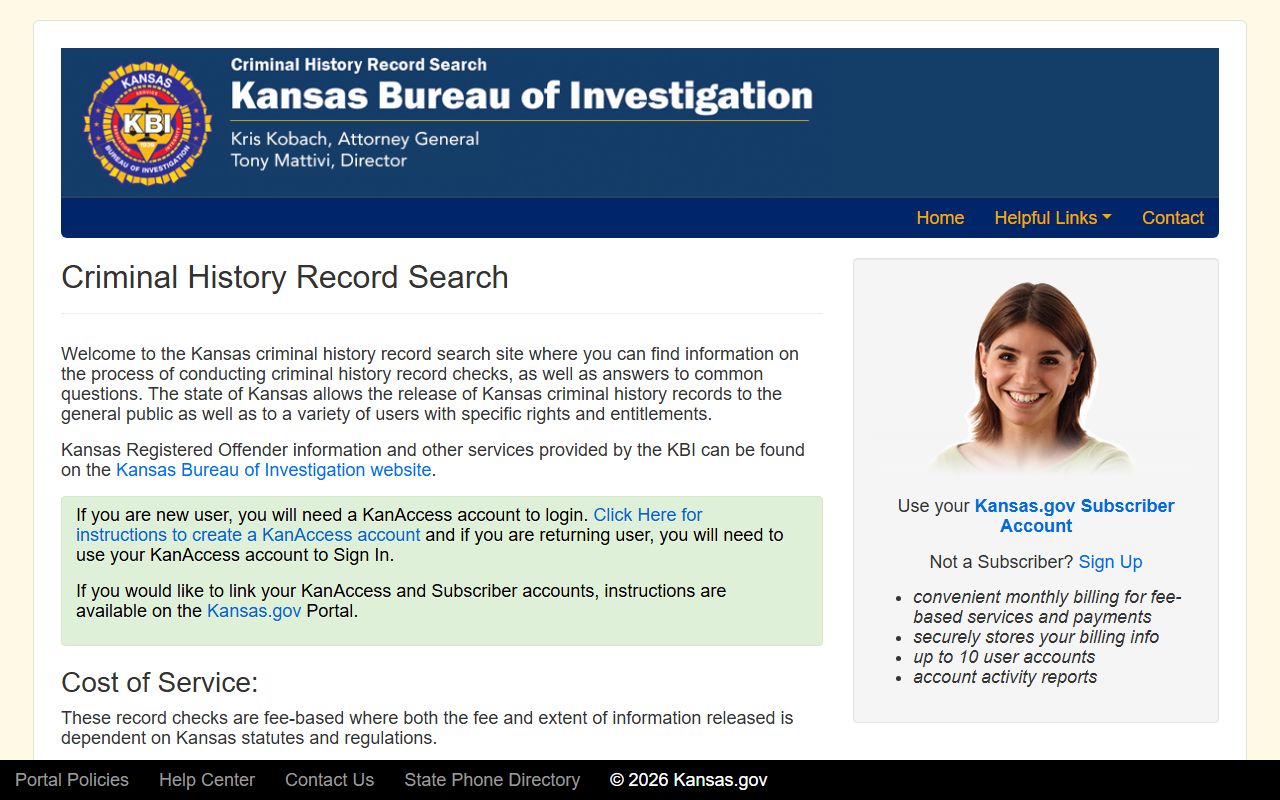
Use the KBI channel for statewide criminal-history checks, and use CaseSearch or the district court clerk for the local court file after arrest.
Important: Criminal case, jail custody, and statewide history records can differ because each system serves a different legal purpose.
Restricted Marshall County Court Records
Kansas Open Records Act policy favors access to public records unless a law closes or limits the record. K.S.A. 45-221 lists records agencies are not required to disclose, including criminal investigation records. The law also supports separating open material from closed material when possible. That matters after an arrest because one file may contain public court entries, restricted investigative material, personal identifiers, juvenile information, sealed filings, or victim and witness information.
Kansas court records may be requested through the court, and the Judicial Branch says requests are acted on by the end of the third business day after receipt. If a Marshall County court record after arrest is not visible online, the best route is to ask the district court clerk what access method applies. If the record is a sheriff or jail record rather than a court record, use the jail phone first and then the County Clerk KORA route.
Note: A court record after arrest may prove a case was filed, but it does not prove current custody at Marshall County Jail.